Skip to the main content.

4 min read

A 19-Year-Old Design, Built Again

A 19-Year-Old Design, Built Again

How Metalforms recreated a legacy Koch Heat Transfer exchanger and delivered it eight weeks ahead of schedule.

After nearly two decades of continuous service, two shell-and-tube heat exchangers at a large North American smelting operation were reaching the end of their service life.

Originally supplied by Koch Heat Transfer Canada LP in 2007, the exchangers performed critical raw-water cooling duty at the facility in Rouyn-Noranda, Quebec. By late 2025, the units had begun leaking badly enough to cause operational shutdowns while the maintenance team worked to keep them running.

The customer came to Metalforms with a straightforward question: could we provide a direct replacement that matched the dimensions and specifications of the original Koch equipment?

The answer was yes.

But as the condition of the existing equipment continued to deteriorate, the project became about more than recreating a legacy design. The replacement needed to get there faster.


Replacing a Legacy Koch Heat Exchanger Without Redesigning the System

For a plant trying to minimize unplanned downtime, a direct replacement meant more than supplying another shell-and-tube heat exchanger.

The new unit needed to match the form, fit and thermal performance of the 19-year-old design so it could be installed within the existing piping and structural footprint without requiring the surrounding system to be re-engineered.

Metalforms had an important advantage.

As the owner of the legacy Koch Heat Transfer design assets, drawings and intellectual property, Metalforms could return to the original exchanger configuration rather than attempt to reverse-engineer it from scratch.

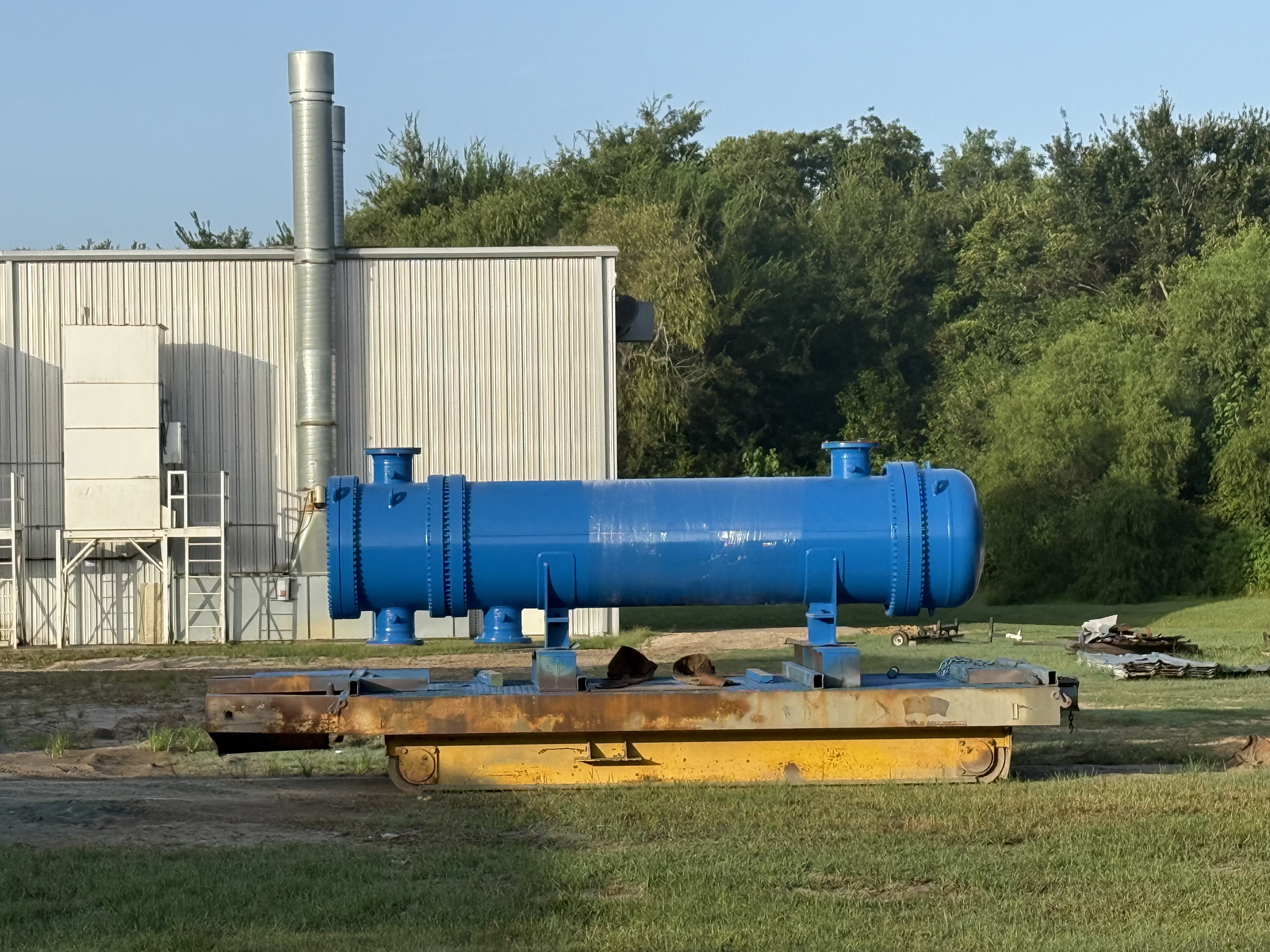
The thermal design and estimating team pulled the original Koch configuration, confirmed its mechanical and thermal specifications, and engineered a replacement-in-kind Type AES 35-135 shell-and-tube heat exchanger built to TEMA Class B and ASME Section VIII, Division 1 requirements.


Matching Heat Exchanger Metallurgy to the Existing Raw-Water Service

Matching the exchanger's dimensions was only part of creating a true replacement.

The metallurgy also needed to remain appropriate for the plant's raw-water cooling service.

Because the filtered raw-water chemistry had not changed from the original application, Metalforms' engineers were able to validate the metallurgy used in the original design rather than introduce a material change that could affect thermal performance or service life.

The replacement retained a seamless admiralty brass tube bundle with 1,020 tubes, each 3/4-inch OD and running the full 11-foot, 3-inch tube length. The material was selected to maintain the balance of heat-transfer performance and corrosion resistance established by the original Koch design.

Every heat of tube material was PMI-verified using XRF analysis, with material test reports maintained for each component.

  • 2 1/2-inch thick carbon steel stationary and floating tubesheetsFine grain practice forgings for the major body flanges
  • A floating head/split-ring rear head consistent with the original Koch configuration
  • 1/16-inch corrosion allowance in the tubesheets and pressure parts
  • 150 psig/250°F design conditions on both the shell and channel sides
  • Hydrostatic testing at 195 psig
  • Full ASME and manufacturer material traceability

The completed exchanger weighed approximately 15,100 pounds dry, with an 8,100-pound tube bundle.


Building and Finishing the Replacement Heat Exchanger In-House

The replacement moved through fabrication at Metalforms' Beaumont, Texas facility, where the team machined, fabricated, assembled and tested the unit.

Machinists and CNC drill operators produced the tubesheets and tube holes to the required tolerances. Fabricators fit and welded the shell and channel components, while experienced boilermakers assembled the bundle, installed it into the shell, rolled the tubes into the tubesheets and prepared the completed unit for pressure testing.

Quality control verified radiography, hydrostatic testing and material traceability throughout the process.

Once fabrication was complete, the exchanger moved through Metalforms' in-house abrasive blast and paint facility. It received a two-coat protective system consisting of a zinc-rich primer and safety-blue finish coat before final assembly and preparation for shipment to Canada.


Expediting Heat Exchanger Delivery by Eight Weeks

The original schedule did not stay the schedule for long.

Metalforms issued a budget quote in January 2026 while the customer worked through internal funding. As the existing exchangers continued to deteriorate, the customer returned with a more urgent request.

Could Metalforms get the replacement there sooner?

Tube procurement represented the largest lead-time constraint, so simply pushing the shop harder would not solve the problem. The schedule had to be compressed across engineering, procurement, fabrication and logistics.

  • Expedited engineering review for mechanical compliance and thermal performance

  • Expedited long-lead tube procurement to compress the controlling path in the schedule

  • Re-sequenced shop fabrication, welding, and NDE to keep pace with accelerated material delivery

  • Coordinated logistics and shipping planning in parallel with fabrication

The result was a replacement exchanger delivered eight weeks ahead of the original schedule, without reducing the required code compliance, NDE or quality documentation.


Extending the Life of Legacy Koch Heat Transfer Equipment

From the first inquiry to a fully fabricated, code-stamped, painted and shipped exchanger, the project brought together two sides of Metalforms' capabilities.

The first was history. Access to the original Koch Heat Transfer design allowed the team to recreate a decades-old exchanger with the form, fit, thermal performance and metallurgy required for the existing service.

The second was execution. Engineering, supply chain, machining, fabrication, boilermaking and quality control worked against an accelerated schedule to get the customer's critical replacement into the field eight weeks sooner than originally planned.

For facilities still operating legacy Koch Heat Transfer equipment, replacing an aging exchanger does not necessarily mean starting over.

Sometimes, the original design is exactly where the replacement should begin.


Frequently Asked Questions About Legacy Heat Exchanger Replacement

Can Metalforms replace legacy Koch Heat Transfer exchangers?

Yes. Metalforms owns legacy Koch Heat Transfer design assets, drawings and intellectual property, allowing its engineering team to support replacement of legacy equipment using original design information where applicable. 

What is a replacement-in-kind heat exchanger?

A replacement-in-kind exchanger is engineered to match key characteristics of existing equipment, including its form, fit and required performance. For this project, that allowed the replacement to fit the existing piping and structural footprint without re-engineering the surrounding system. 

What type of shell-and-tube heat exchanger was supplied?

Metalforms supplied a Type AES 35-135 shell-and-tube heat exchanger designed to TEMA Class B and ASME Section VIII, Division 1 requirements.

Can Metalforms expedite a replacement heat exchanger?

Project schedules depend on the exchanger design, materials and current production requirements. On this project, Metalforms expedited engineering and long-lead material procurement, re-sequenced fabrication and coordinated logistics in parallel, ultimately moving delivery forward by eight weeks. 

Does Metalforms fabricate and test shell-and-tube heat exchangers in-house?

For this project, machining, fabrication, bundle assembly, pressure testing, abrasive blasting and painting were completed through Metalforms' operations in Beaumont, Texas. Quality control also verified radiography, hydrostatic testing and material traceability throughout the project. 

Need to replace an aging Koch Heat Transfer exchanger? Metalforms can help evaluate the existing design and determine the right path to a replacement.

Metalforms Joins TransTech

Metalforms Joins TransTech

Customers to Benefit from Expanded Capabilities & Locations

Read More
TransTech Group and Metalforms Complete Acquisition of Koch Heat Transfer’s International Operations, Launch European Entity and Reestablish Global Partner Network

TransTech Group and Metalforms Complete Acquisition of Koch Heat Transfer’s International Operations, Launch European Entity and Reestablish Global Partner Network

TransTech Group (TransTech), a leading portfolio company of Bridge Industries (Bridge), has completed the acquisition of Koch Heat Transfer’s...
Read More
TransTech Group's Metalforms Acquires Koch Heat Transfer

TransTech Group's Metalforms Acquires Koch Heat Transfer

Rebranded as Metalforms Heat Transfer View the full Press Release Here TransTech Group, a leading portfolio company of Bridge Industries (Bridge), is...

Read More